

How to Think Like a Jewelry Designer!
(Even before you start sketching)
When most people imagine Jewelry design, they picture beautiful sketches, sparkling gemstones and finishes pieces radiating under the perfect lighting. But ask any experienced designer, and they’ll tell you something surprising:
Great jewelry design doesn’t begin with drawing. It begins with THINKING!
The difference between someone who decorates and someone who designs is often not skill—it’s PERSPECTIVE.
A jewelry designer doesn’t just ask: “What should I make?”
They ask: “What story should this piece tell?”
Whether you’re a student, aspiring designer, creative entrepreneur, or someone rediscovering creativity, learning to think like a jewelry designer can completely transform the way you create.
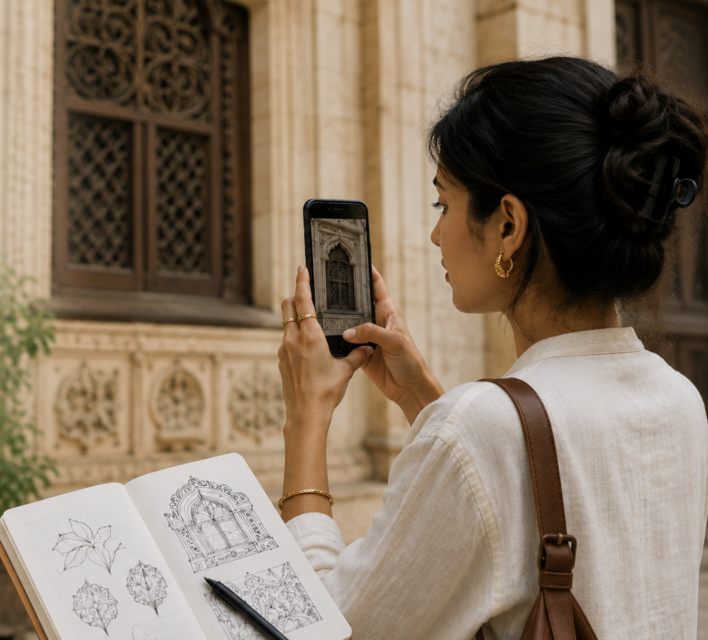
1. Observe Before You Create
Most beginners look for inspiration. Professional designers collect it every day.
Walk through any city and you’ll discover jewelry hiding in plain sight.
The rhythm of Gothic arches. The geometry of Islamic architecture. The veins of a leaf. The movement of ocean waves. The folds of silk. The texture of aged stone.
Nothing is “just an object.” Everything becomes visual vocabulary.
This is why experienced designers often travel with hundreds of reference photographs—not because they intend to copy them, but because they train their eyes to recognize patterns, proportions, textures and emotions.
A designer’s phone should ideally contain more inspiration than selfies.
Try this: Carry an inspiration folder on your phone for materials, emotions and unexpected combinations…because a good design starts with CURIOSITY !!!
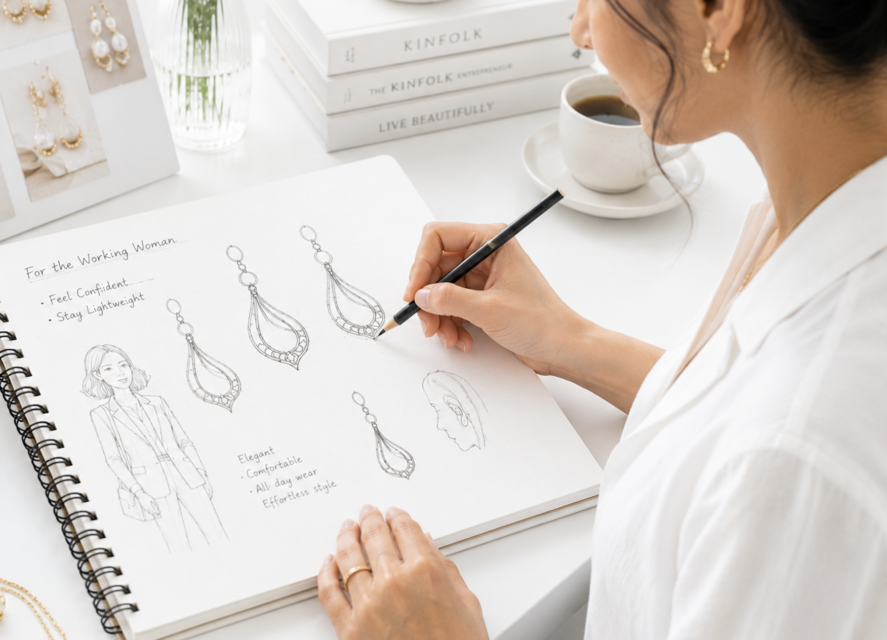
2. Ask “What If?” Until Your Creation Surprises You
One common mistake beginners make is jumping directly into sketching. Professional designers begin with intention. Design thinking begins with curiosity.
Instead of accepting things as they are, ask:
– What if this earring transformed into a pendant
– What if this necklace became modular?
– What if traditional craftsmanship met modern styling?
Innovation rarely comes from inventing something completely new. Great collections are often born from unexpected combinations or more like combining familiar ideas in unfamiliar ways.
3. Learn to Build Stories, Not Just Products
People connect with meaning!!
People don’t buy jewelry just because of metal and gemstones. They buy memories. Identity. Emotion. Meaning. And that’s why the world’s most iconic jewelry collections feel bigger than the products themselves.
A strong jewelry collection should have:
– A clear inspiration
– A compelling story or narrative
– Visual consistency
– Emotional resonance
Your inspiration could come from travel, architecture, mythology, nature, festivals, personal memories or cultural heritage.
Behind every memorable collection is a narrative.
When I’m developing a collection, I often ask one simple question: “If this piece could speak, what would it say?”
If you don’t know the answer, your customer probably won’t either.
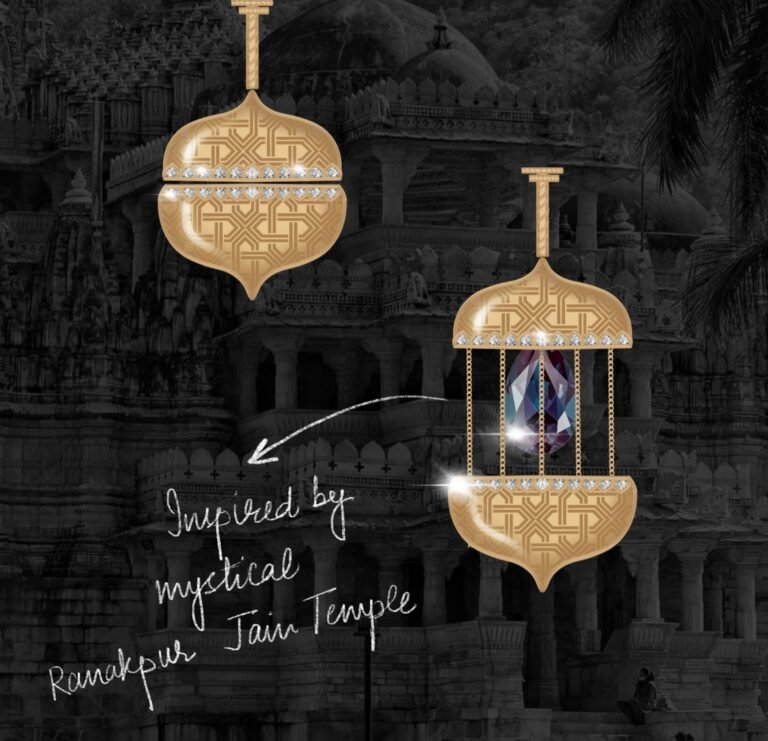
{Seen here is one of my award-winning earring designs, created digitally in Procreate. It was inspired by the mystical architecture of the Ranakpur Jain Temple.
Instead of merely recreating its carvings, I translated its essence into movement.
The earrings unfold to reveal a hidden gemstone that changes colour in sunlight—mirroring the experience of discovering light inside the temple itself.
The story wasn’t added after the design. The story became the design.}
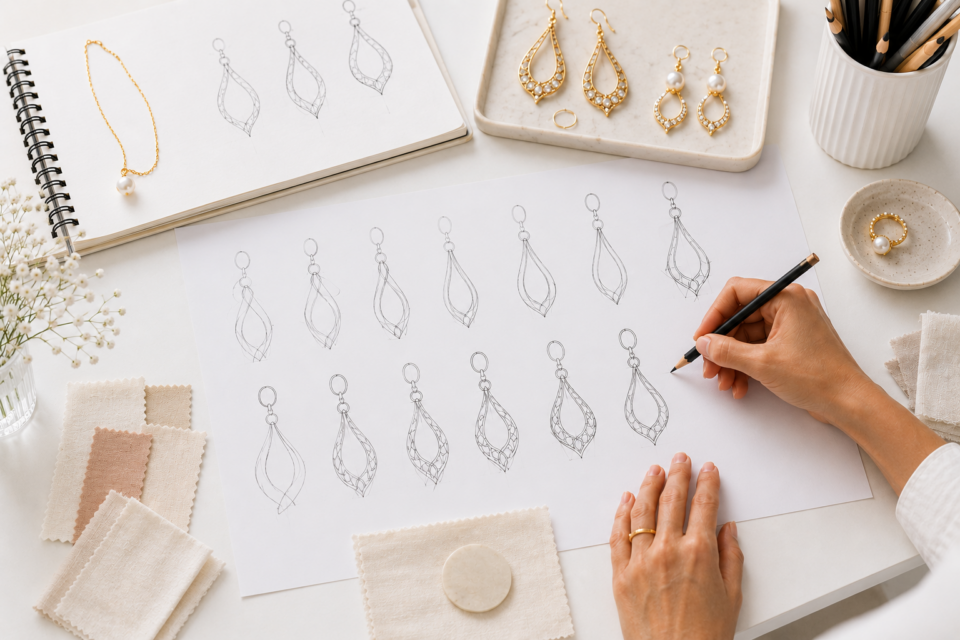
4. Accept Iteration as Part of Creativity
Every beginner hopes their first sketch will be the final one. Professional designers know it almost never is.
The luxury jewelry industry isn’t built on first drafts. It’s built on relentless refinement.
The best designers constantly:
– Explore multiple directions.
– Edit without emotion.
– Improve proportions.
– Simplify details.
– Start over when necessary.
Iteration isn’t failure. It’s where creativity actually happens. The sketch you throw away today often becomes tomorrow’s strongest collection. Progress has always been more valuable than perfection.
Progress beats perfection!!
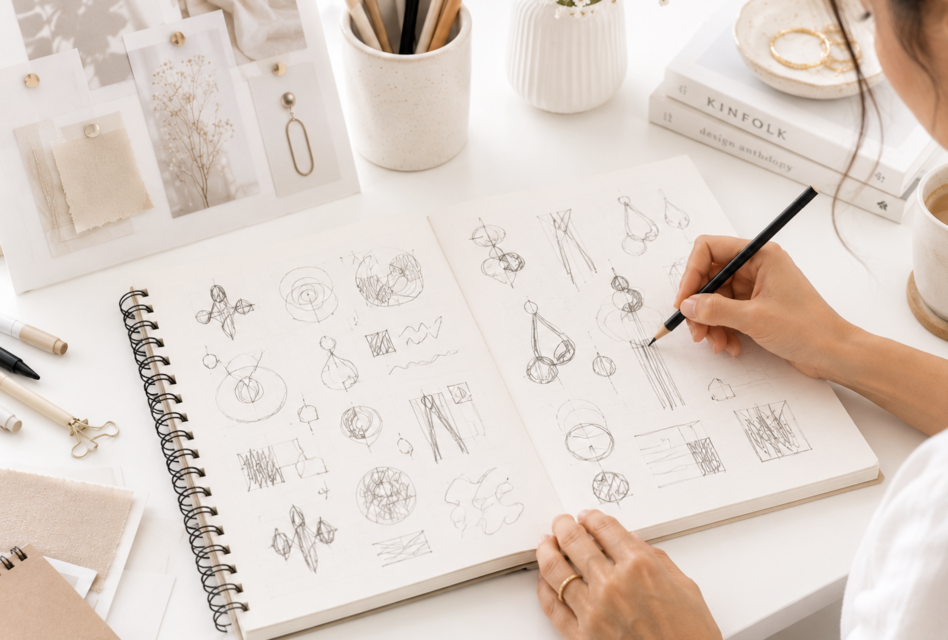
5. Sketch to Think & Explore, Not to Impress
Many students feel pressure to create perfect illustrations. But sketching is actually THINKING on PAPER. Messy pages often lead to stronger ideas!
Many students treat sketching as performance. Professionals treat it as conversation. Your sketchbook isn’t a portfolio. It’s your laboratory.
Messy pages usually produce stronger ideas than perfect illustrations because they remove the fear of failure.
Allow yourself to:
– Draw quickly
– Experiment freely
– Make mistakes
– Explore alternatives
A sketch isn’t proof that you’ve found the answer. It’s proof that you’re asking better questions.
The Real Difference Between an Artist and a Jewelry Designer
Why France Dominates Luxury Jewelry
Artists often express. Designers solve.
Artists create from emotion. Designers combine emotion with intention.
Every successful jewelry design answers a problem—even if that problem is simply helping someone express love, confidence, celebration or identity. That’s why thinking like a jewelry designer goes far beyond drawing skills. It is a mindset built through observation.
Curiosity – Storytelling – Experimentation – Reflection.
The next time you begin designing, don’t rush to draw the first line.
Pause – Observe – Question – Imagine.
Because the most valuable tool in jewelry design isn’t your pencil. It’s the way you train your mind to see the world.
What jewelry design topic would you like me to decode next?
Ready to Build Your Design Voice?
Whether you’re a student, aspiring jewelry designer, or creative explorer, this bootcamp is designed to help you think beyond aesthetics and design with intention.
Through guided mentorship, creative exercises, sketching methods, and real design processes, you’ll strengthen your creativity, sharpen your design thinking, and develop a more confident approach to creating original jewelry.
JOIN the Jewelry Design Bootcamp and start turning ideas into designs that feel truly your own.

CHIYO
by Mridu Jain
Join my community!